Healthcare AI infrastructure
for dental practice.
Occlus builds the whole system a dental practice runs on — practice management, the clinical record, and the reading of the films. One platform, with the AI inside the work rather than beside it.
Nothing new for your staff to install. Nothing new for your patients to learn.
Six systems, one record. Select any of them to read what it actually does.
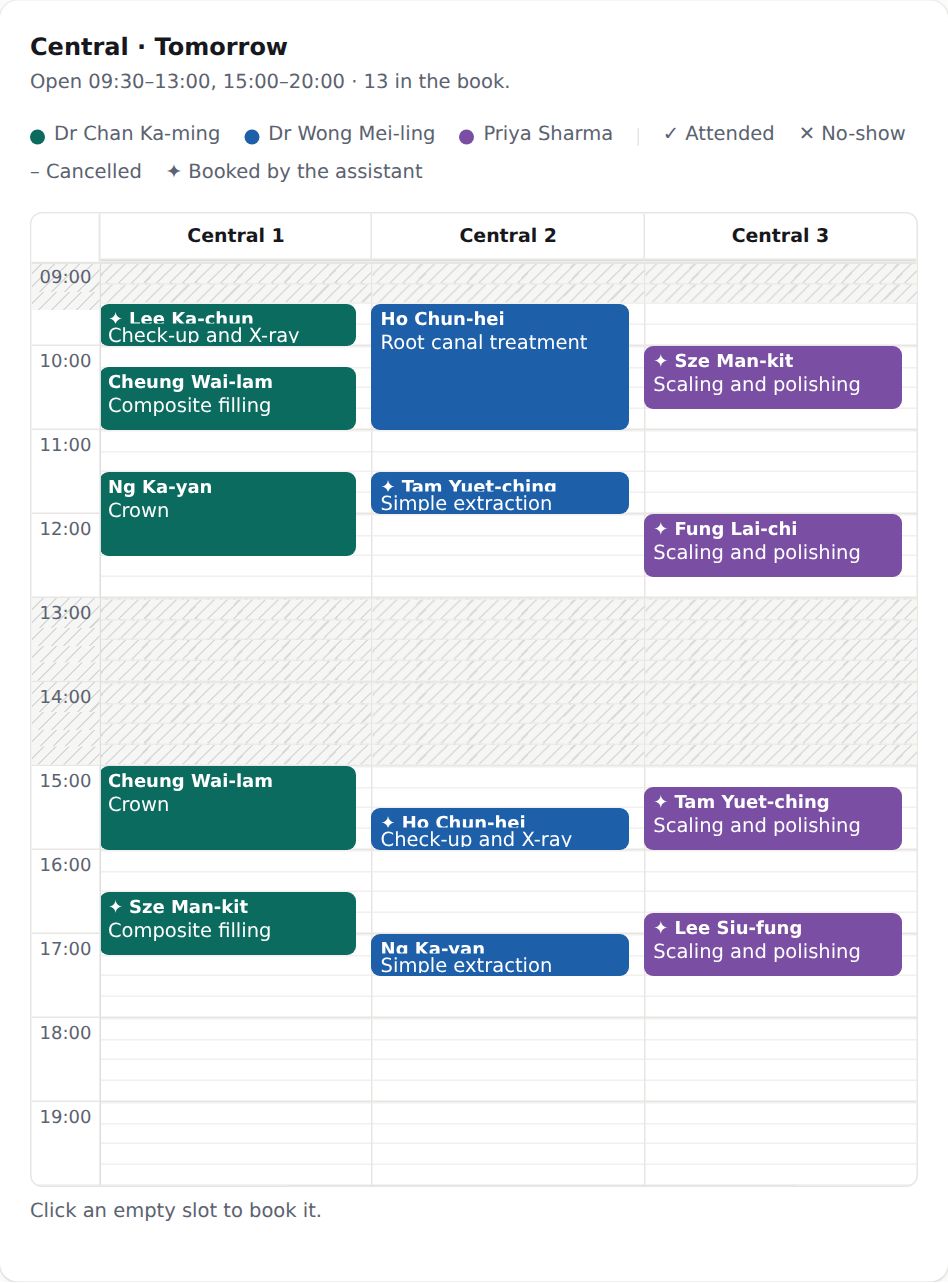 DiaryEvery chair, every branch, one calendar.
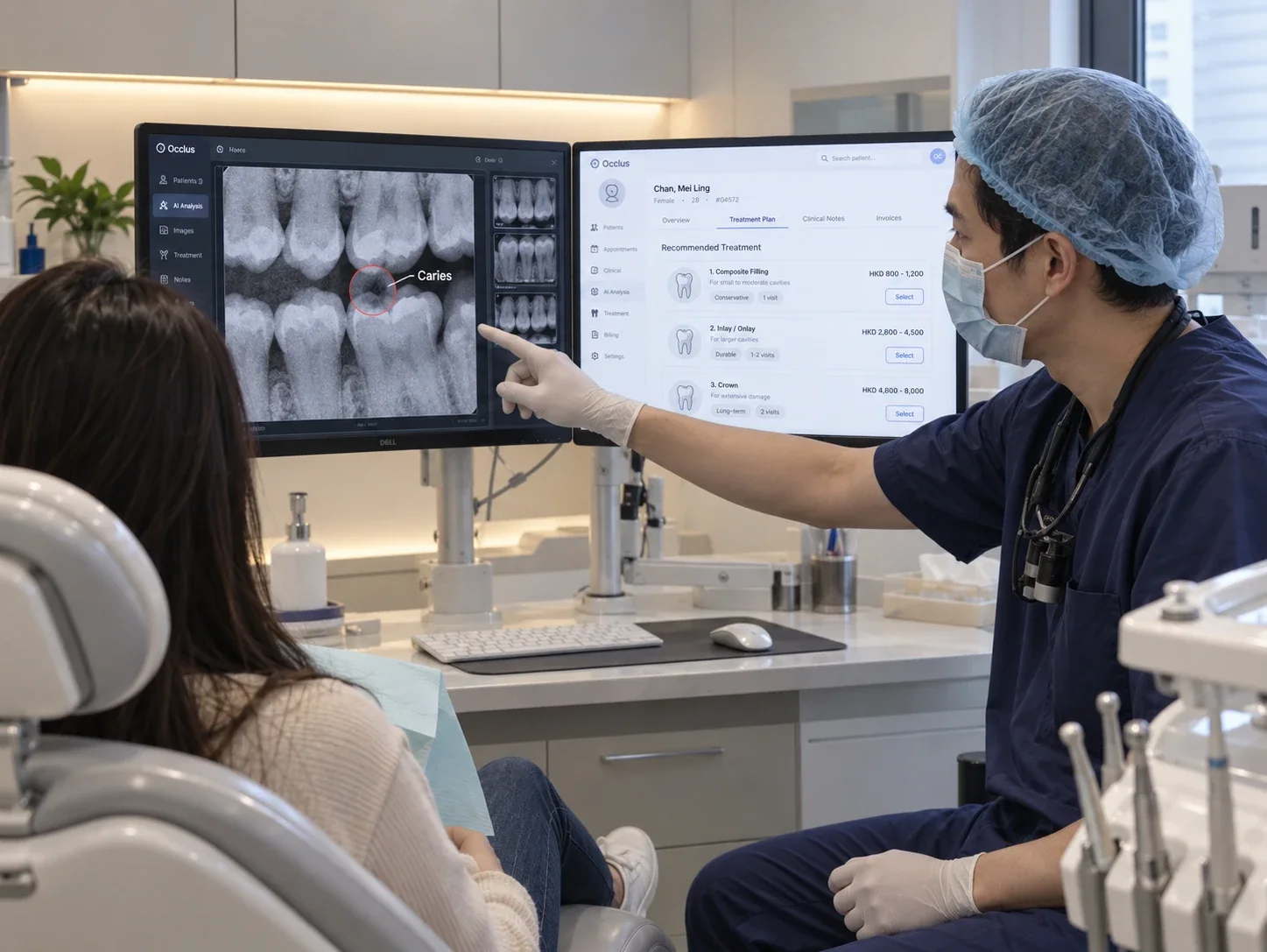 Imaging AIPerioMind 5 reads every film.
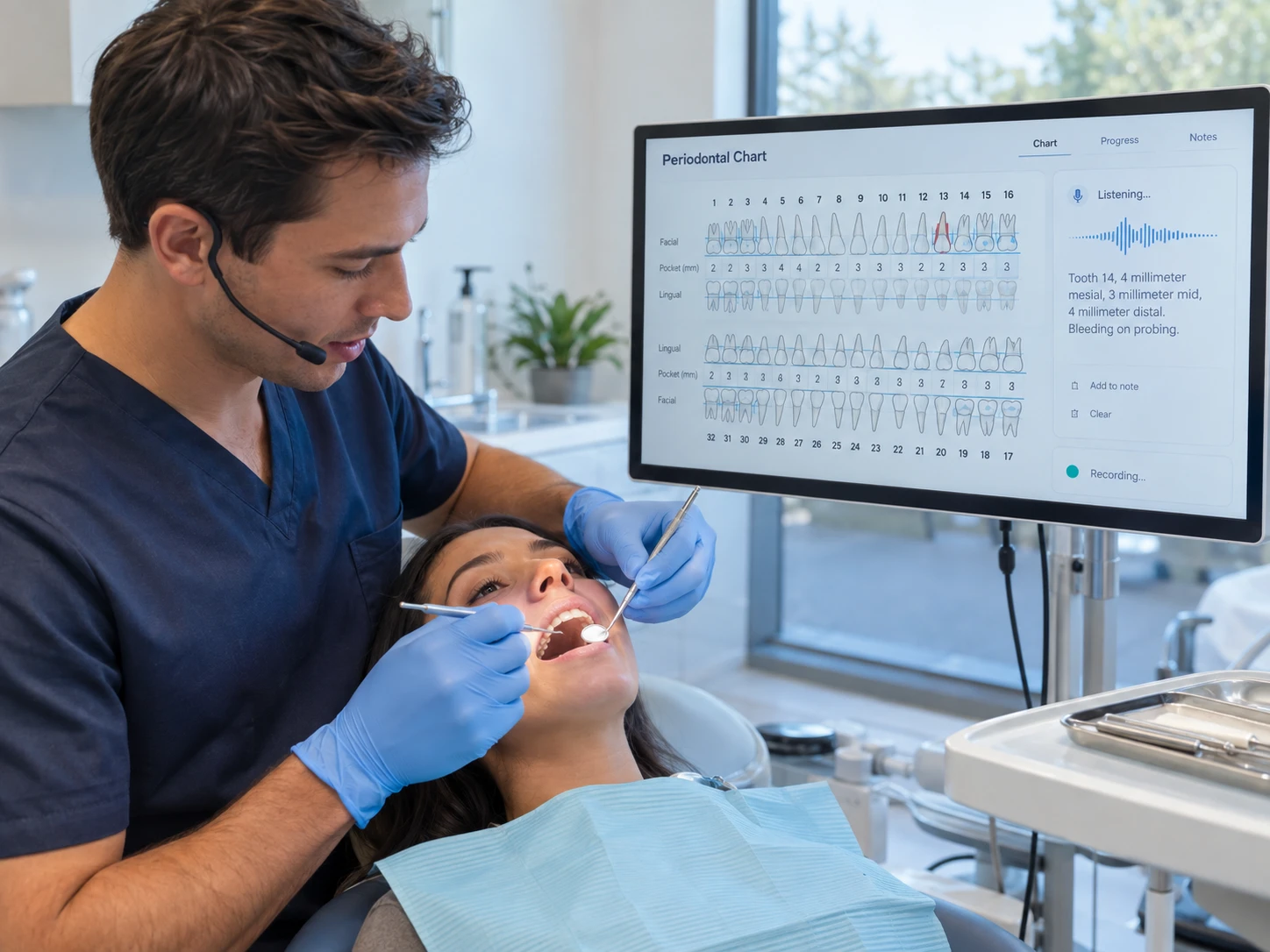 Voice chartingThe chart fills in as the clinician speaks.
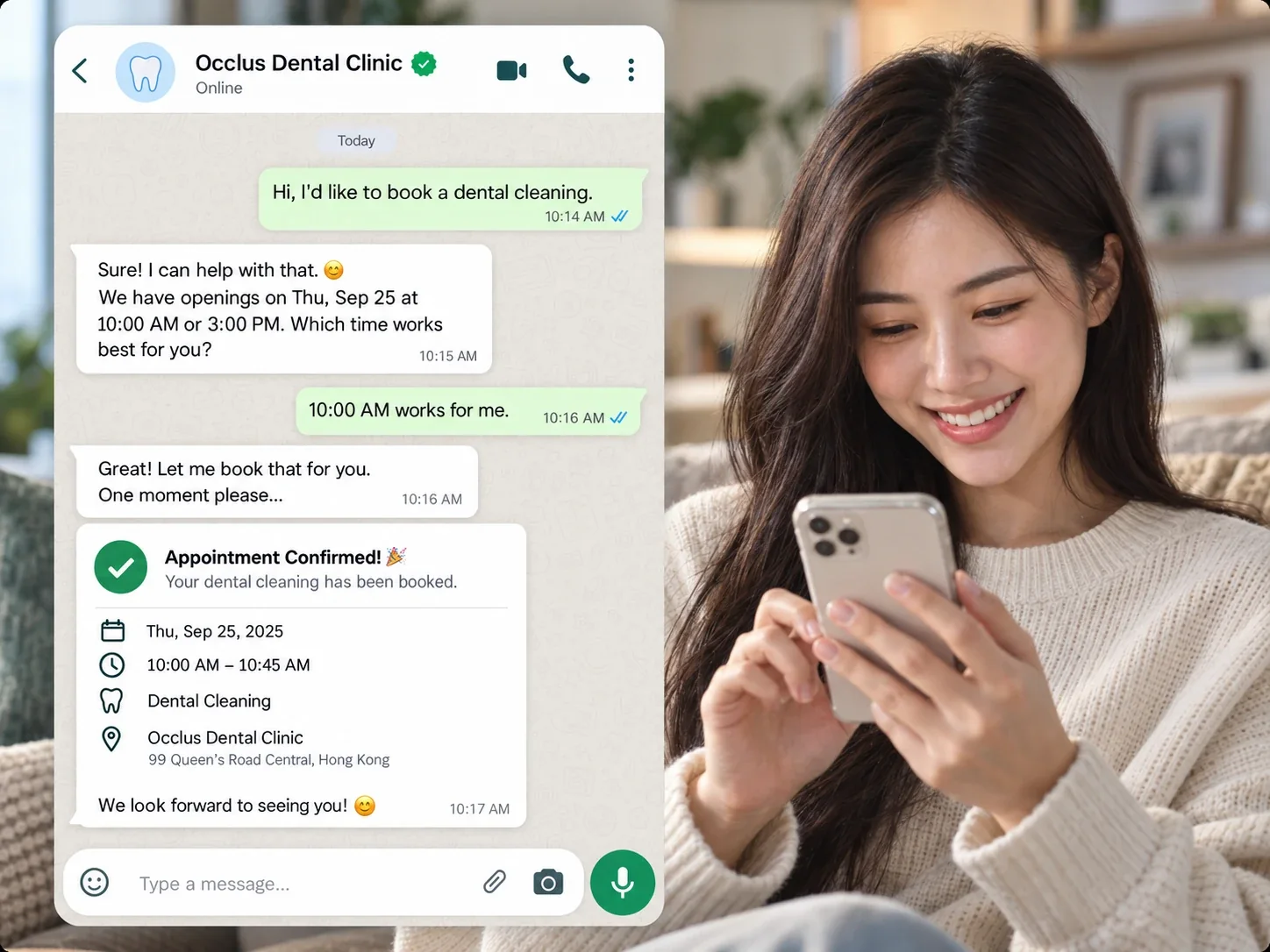 Patient messagingBooking, deposits and recalls in one thread.
 Billing, inventory and CRMWhat is owed, what is in stock, who is due back.
 AnalyticsThe day's business, and where next quarter's comes from.
Diary
The diary and the patient messaging are the same record. A patient books over WhatsApp and the time lands against a real chair, a real dentist and a real rota — so a dentist opens the morning and sees the day as it actually is.
- Every dentist opens the day on their own list: today's appointments, chair by chair and branch by branch.
- Bookings, changes and cancellations arrive from WhatsApp straight into this diary. Nothing is re-keyed at the front desk.
- There is no double booking, because there is no second calendar to disagree with — the assistant can only offer a slot this diary says is free, and the database refuses an overlap outright.
- Confirmations, reminders and recalls go out automatically, from what the diary already knows.
Imaging AI
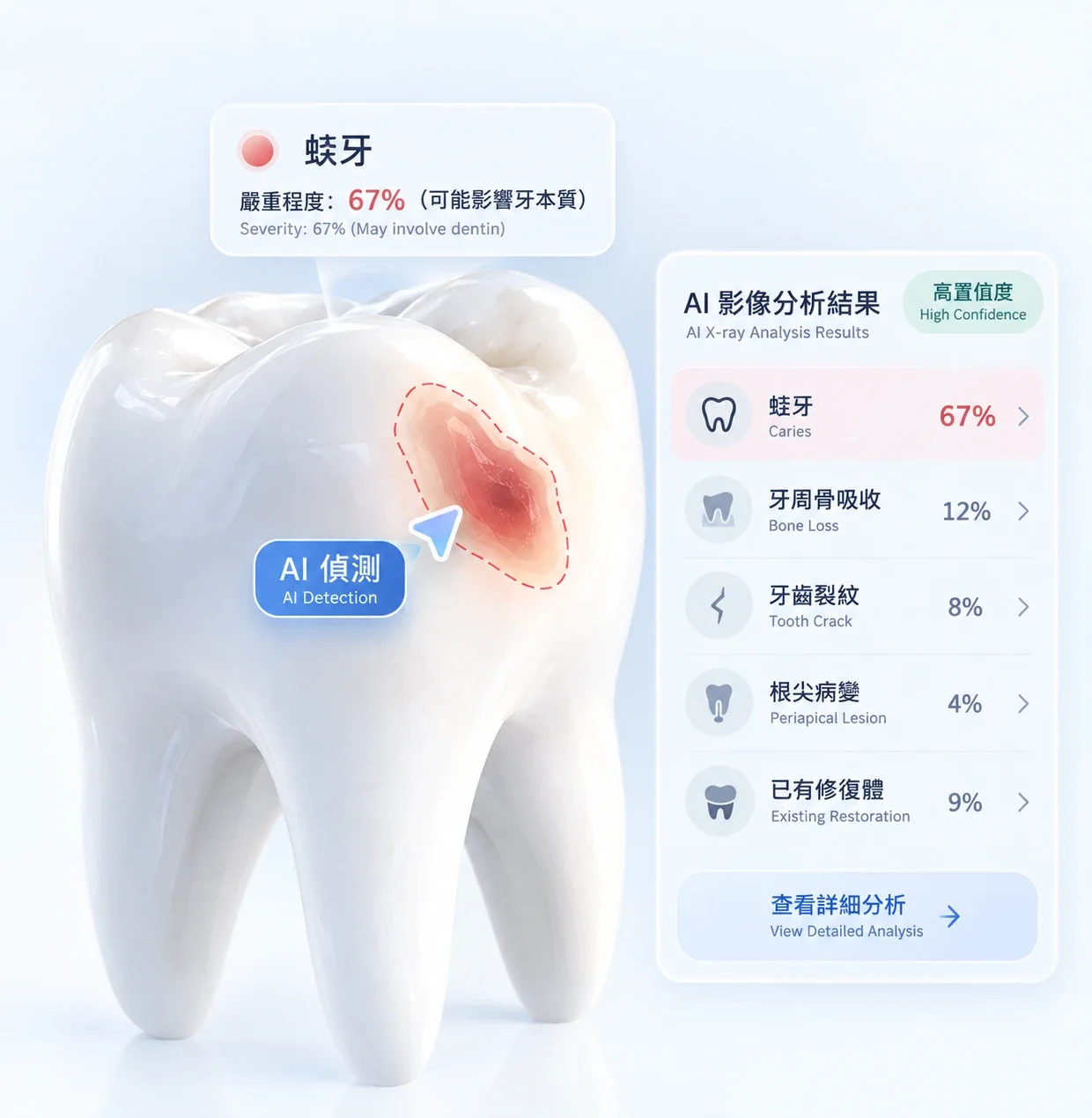
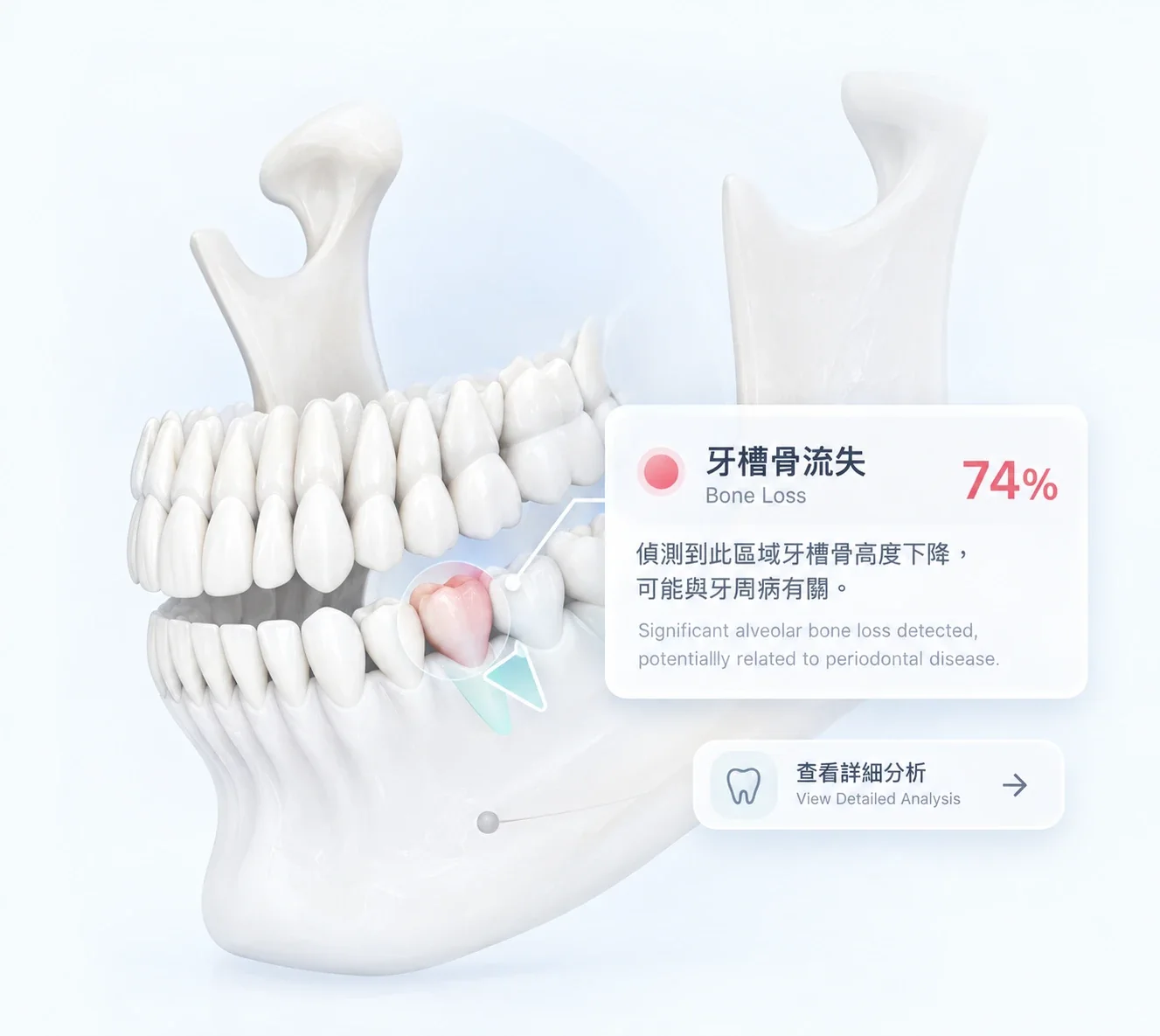
PerioMind 5 is our flagship model and the first commercial dental AI model built in Hong Kong. It reads four kinds of imaging and hands what it finds back to the treatment plan and the treatment note, so the read and the treatment are one record.
- Four kinds of imaging: bitewing, periapical, panoramic and CBCT.
- 95 to 99% accuracy on the detections and conditions it is trained for — measured on defined pathologies under specified imaging conditions, and pending formal clinical validation.
- Findings carry into the treatment plan and the treatment note, which is what makes them useful for diagnosis and for planning rather than a second screen to read.
- A dentist confirms or throws out every finding before it reaches the chart. PerioMind 5 proposes; it never diagnoses.
Voice charting
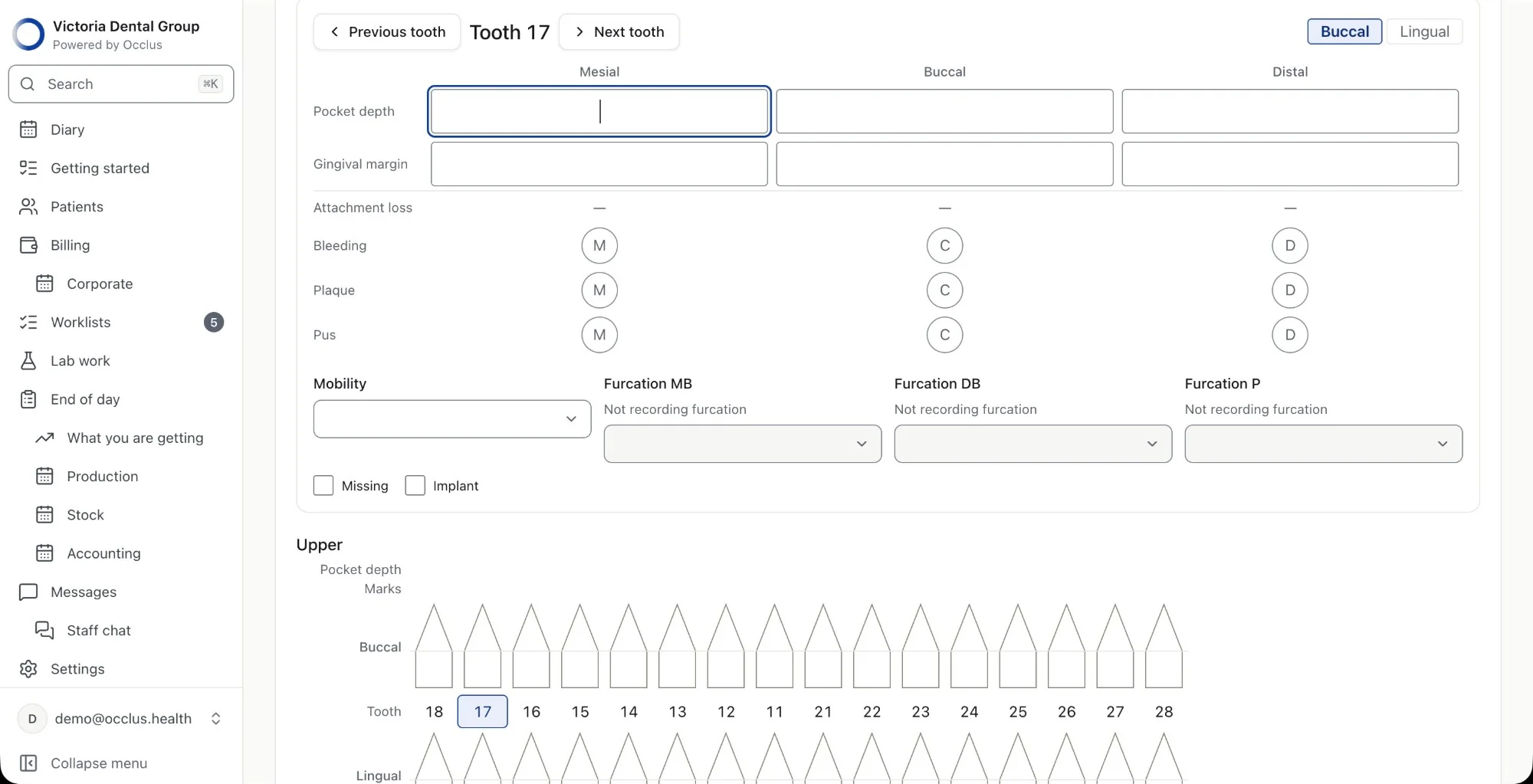
Full-mouth perio charting and treatment notes, transcribed while the appointment is happening. The work that used to need a second person in the surgery is done by the transcription.
- Pocket depths, recession, bleeding and mobility, read out tooth by tooth and written straight into the chart.
- Treatment notes transcribe as the consultation runs and are ready for a dentist to read and sign when it ends.
- No second pair of hands at the chair to write things down, and no evening spent catching up on notes.
- Staffing cost falls where it was being spent on transcription and chair-side data entry.
Patient messaging
One inbox for everything a patient writes on WhatsApp — answered by you, or answered for you. It runs the recalls, takes the deposit and sends the reminders, which is where most of a front desk's day goes.
- Reply to patients from one place, in Cantonese, English or Mandarin, and take the thread over from the assistant mid-sentence whenever you want it.
- Patient recalls go out on schedule and book themselves back into the diary.
- Deposits are taken inside the thread, so a booked chair is a paid chair.
- Reminders, confirmations and follow-ups run without anybody at the desk, which is where the overhead goes.
Billing, inventory and CRM
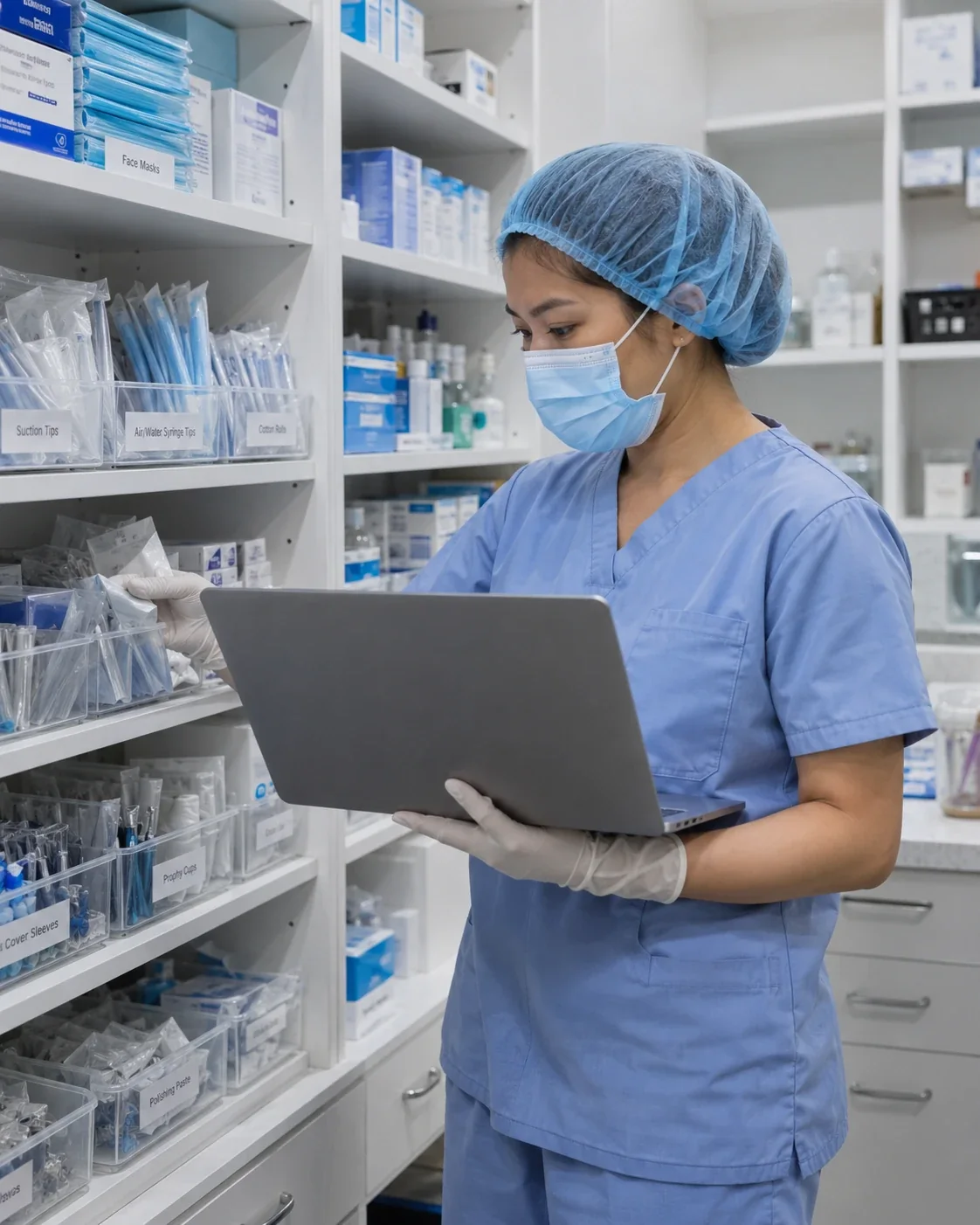
The commercial side of the practice, on the same record as the clinical side: billing and the tracking of it, stock control, and the whole relationship with each patient.
- Billing: invoices, claims, deposits, instalments and what is outstanding, tracked through to settlement.
- Inventory: every count checked against what actually moved, with reorder points that fire before a shelf is empty.
- CRM: visits, spend, recalls, referrals, families and lapses — the whole relationship with a patient in one view.
- All three read the same record, so a treatment, the stock it consumed and the invoice it raised can never disagree.
Analytics
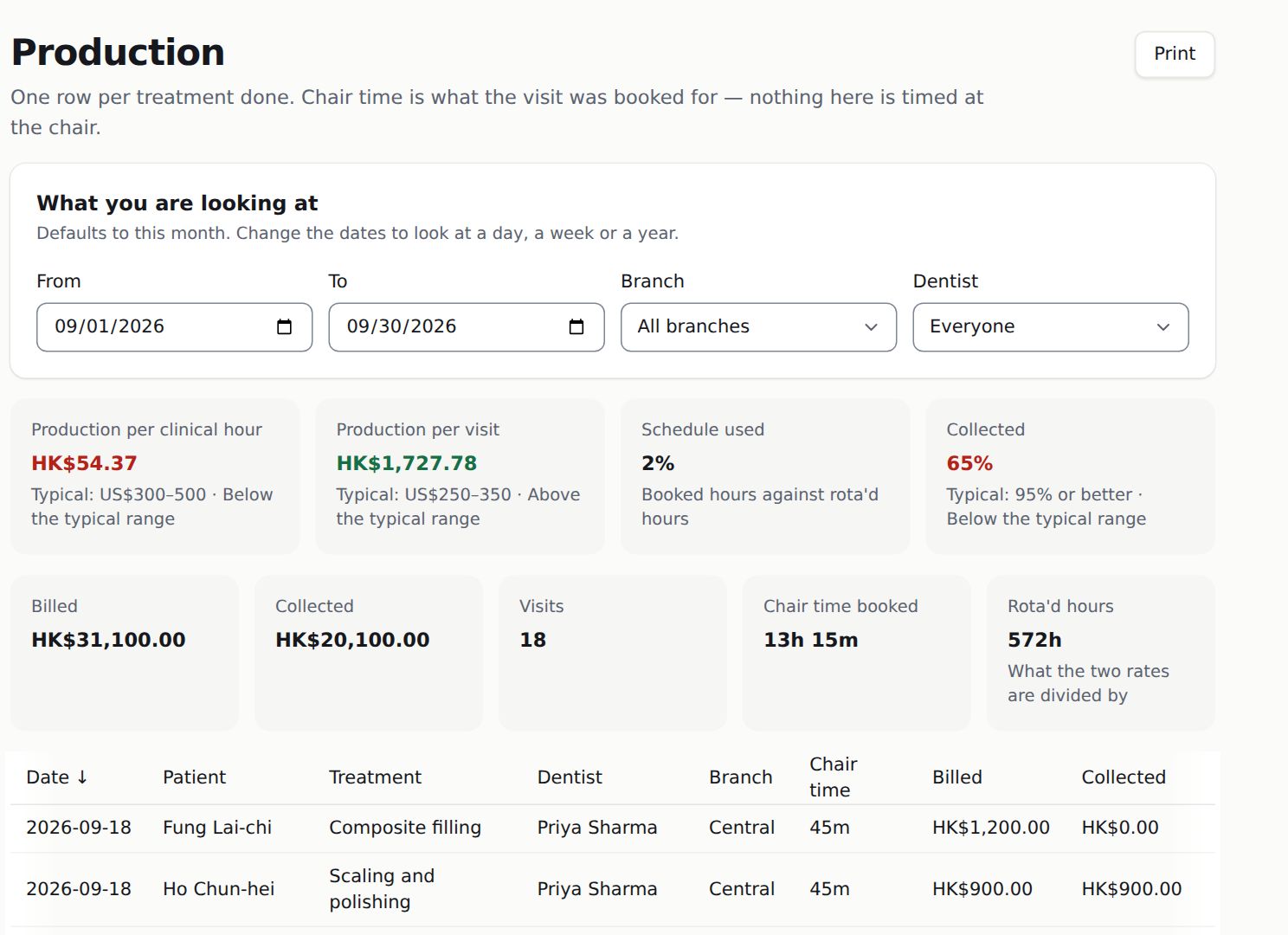
Day-to-day business analytics for the practice, and the analysis that turns them into a decision rather than a dashboard nobody opens.
- Production, collections, chair utilisation, no-shows and case acceptance, day by day.
- Per dentist, per chair, per branch and per treatment, compared across any period you choose.
- Where the practice is losing chair time and money, said in a sentence rather than left in a chart.
- Analysis and strategy for business development, built from the record rather than from a spreadsheet somebody maintains.
95to 99%
Detection accuracy on the pathologies PerioMind 5 is trained for
4
Kinds of imaging read automatically — bitewing, periapical, panoramic, CBCT
24/7
Front desk cover on WhatsApp, with a person able to take over mid-sentence
1
System of record for the whole practice, clinical and commercial
Accuracy is measured on defined pathologies under specified imaging conditions and is pending formal clinical validation. A dentist confirms every finding before it reaches the chart.
PerioMind 5
Hong Kong's first commercial dental X-ray AI model.
Our own specialist models, trained by us rather than licensed in as a reader. Two-dimensional films and three-dimensional scans both, with what it finds carried straight through to the report, the treatment plan and the note.
Four kinds of imaging: bitewing, periapical, panoramic, and CBCT volumes.
Streamline reporting
Findings come back marked tooth by tooth and drafted into the report, rather than as a blank page to type from.
Explain clearly to patients
The finding is drawn on the film the patient is looking at, so the reason for the treatment is something they can see rather than something they are told.
Review easily, in 2D and 3D
Flat films and CBCT volumes reviewed on the same screen — and every finding waits for a dentist to confirm it before it reaches the record.
Three things worth knowing before a demo.
The rest is in the six systems above, one click each. These three are about where the messages come from, how the note gets written, and what law the data sits under.
The official Meta WhatsApp Business API.
Patients write to the practice on the WhatsApp they already use, and what carries those messages is Meta's official WhatsApp Business API — not a scan-a-QR-code session pretending to be one. Occlus accepts official numbers only: an unofficial connection never even appears in the list to choose from, and a clinic that tries to attach one is refused. That is the difference between a practice number that can be blocked and one that cannot, and between a message record that stands up and one that does not.
The notes write themselves. The clinician signs them.
Dictate the visit afterwards, or leave Occlus listening through the consultation and it keeps only the clinical part, written into your practice's own headings. Full-mouth charting and periodontal exams can be filled in by voice. The clinician reads it, changes what is wrong, and signs — and after that it cannot be edited, only amended.
Personal Data (Privacy) OrdinanceCap. 486
All personal data is collected and handled under Hong Kong's Personal Data (Privacy) Ordinance, Cap. 486.
The practice is the data user for its patients' records and Occlus processes that data on the practice's behalf. Only what the service needs is collected, it is not used beyond the purpose it was collected for, how long it is kept is written down, and a patient's right to see and correct their own data is handled the way the Ordinance requires. The Privacy Policy states each of those in the Ordinance's own terms.
Read the Privacy PolicySee it run against your own book.
A thirty-minute walkthrough against a real diary, real prices and real hours. Write to Brandon with a couple of times that suit.